“Never Back Pain Again!” – Germany’s Public Broadcaster ZDF Showcases AI-Powered Exoskeletons in Prime-Time Documentary
“Never Back Pain Again!” – Germany’s Public Broadcaster ZDF Showcases AI-Powered Exoskeletons in Prime-Time Documentary
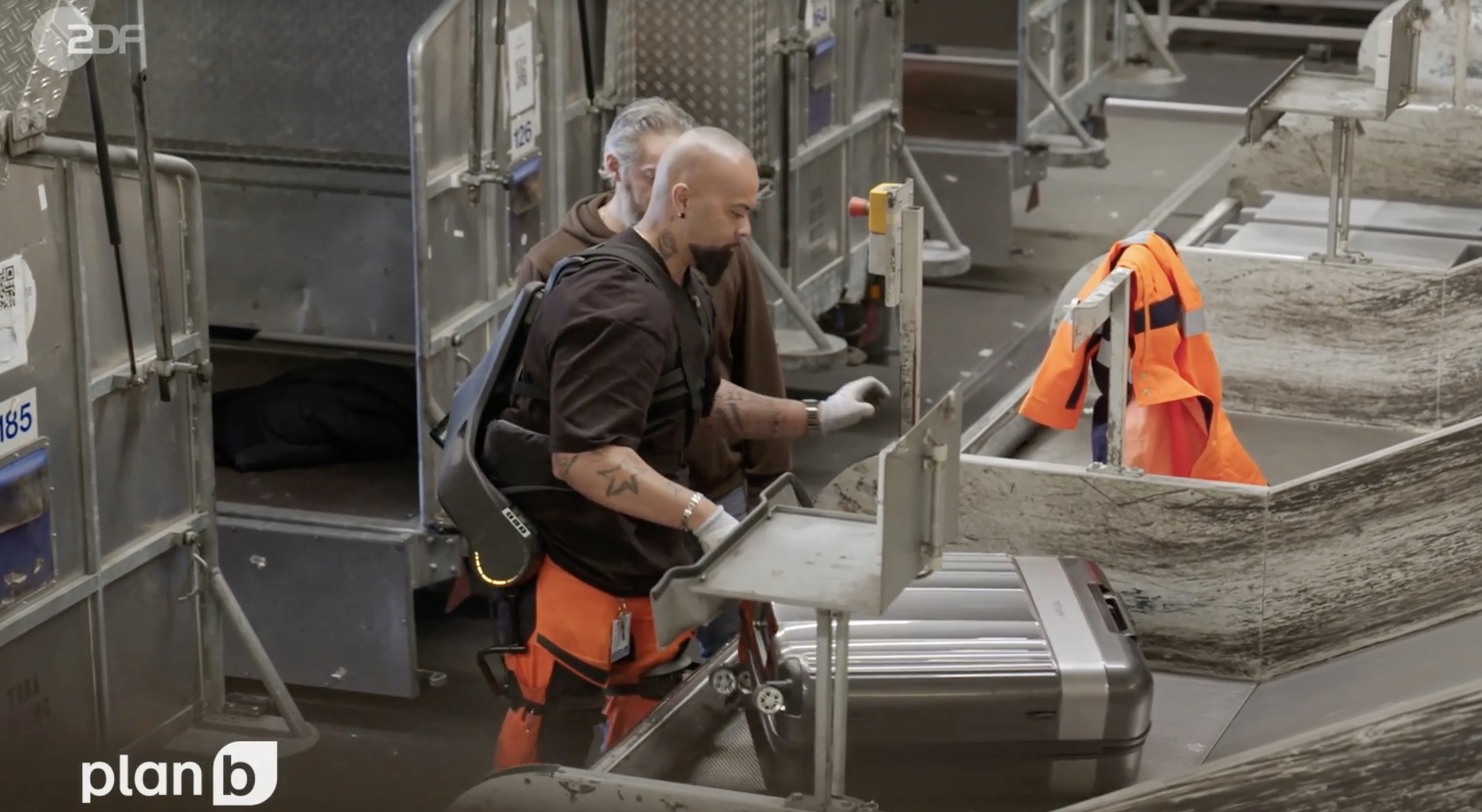
Back pain affects millions of people and is among the most common health complaints worldwide. What really helps – and what role can new technologies play? The latest ZDF documentary, “Nie wieder Rücken!” (“Never Back Pain Again!”), explores these questions. Featured in the programme: German Bionic and its AI-powered exoskeleton EXIA, supporting airport ground handling teams in physically demanding tasks at Nuremberg Airport.
Back pain affects millions of people and is among the most common health complaints worldwide. What really helps – and what role can new technologies play? The latest ZDF documentary, “Nie wieder Rücken!” (“Never Back Pain Again!”), explores these questions. Featured in the programme: German Bionic and its AI-powered exoskeleton EXIA, supporting airport ground handling teams in physically demanding tasks at Nuremberg Airport.
Copy link to share
Copy link to share
Link copied to clipboard !
Copy link to share
Link copied to clipboard !
Whether in offices, healthcare, manufacturing or logistics, back pain is a widespread problem that affects not only people's quality of life but also the world of work.
Public and media interest in how to prevent back pain, reduce physical strain and effectively treat existing conditions is correspondingly high.
The ZDF documentary “Nie wieder Rücken!” (“Never Back Pain Again!”) explores a range of approaches, from physical exercise and physiotherapy to modern pain management and technological innovation.
One of these approaches comes from German Bionic: intelligent, active exoskeletons designed to support people in physically demanding tasks while keeping them fully in control of their movements.
Human Augmentation in Action: EXIA at Nuremberg Airport
For the documentary, German public broadcaster ZDF visits Albrecht Dürer Airport Nuremberg, where ground handling teams use German Bionic's AI-powered exoskeleton EXIA in everyday baggage handling operations.
The physical demands of ground handling are considerable. Thousands of pieces of luggage are moved every day. Individual suitcases can weigh up to 32 kilograms and must be lifted, transferred, carried or positioned in confined aircraft cargo holds, often under significant time pressure.
This is where EXIA comes in. The active exoskeleton provides targeted physical assistance when lifting, lowering and carrying heavy loads, as well as when working in ergonomically challenging postures. By doing so, it can help reduce muscular strain on the lower back and physical fatigue.
What makes EXIA different is its use of Physical AI. Drawing on years of movement data collected in real-world working environments, the system recognizes different movement patterns and physical demands. Its robotic assistance adapts in real time to the individual user and task, providing up to 38 kilograms of adaptive lifting support.
Airports are a particularly compelling example of the technology's potential. While many processes can be automated, tasks such as loading passenger baggage or handling irregularly shaped cargo remain physically demanding and require human flexibility and judgment.
Human Augmentation therefore takes a different approach from full automation: Rather than replacing people, it uses intelligent technology to enhance and support their physical capabilities.
EXIA is already deployed at airports worldwide, demonstrating how human-centric robotics can contribute to more ergonomic and sustainable working conditions.
Watch the full ZDF documentary “Nie wieder Rücken!”.
Why Exoskeletons Are Attracting Growing Media Attention
The ZDF documentary is part of a broader wave of media interest in exoskeletons and Human Augmentation. The conversation is no longer simply about the fascination of advanced robotics. Increasingly, it addresses a question of major societal relevance: How can we help people stay healthy and remain in the workforce throughout their careers, even in physically demanding jobs?
Another example comes from Germany's ARD public broadcaster. In its morning news programme, Morgenmagazin, the segment “MOMA-Reporter: Roboter-Arm und Exoskelett – Mit Hightech gegen den Pflege-Notstand” (“Robotic Arms and Exoskeletons – High-Tech Solutions for the Nursing Shortage”) explored the use of modern assistive technologies in healthcare.
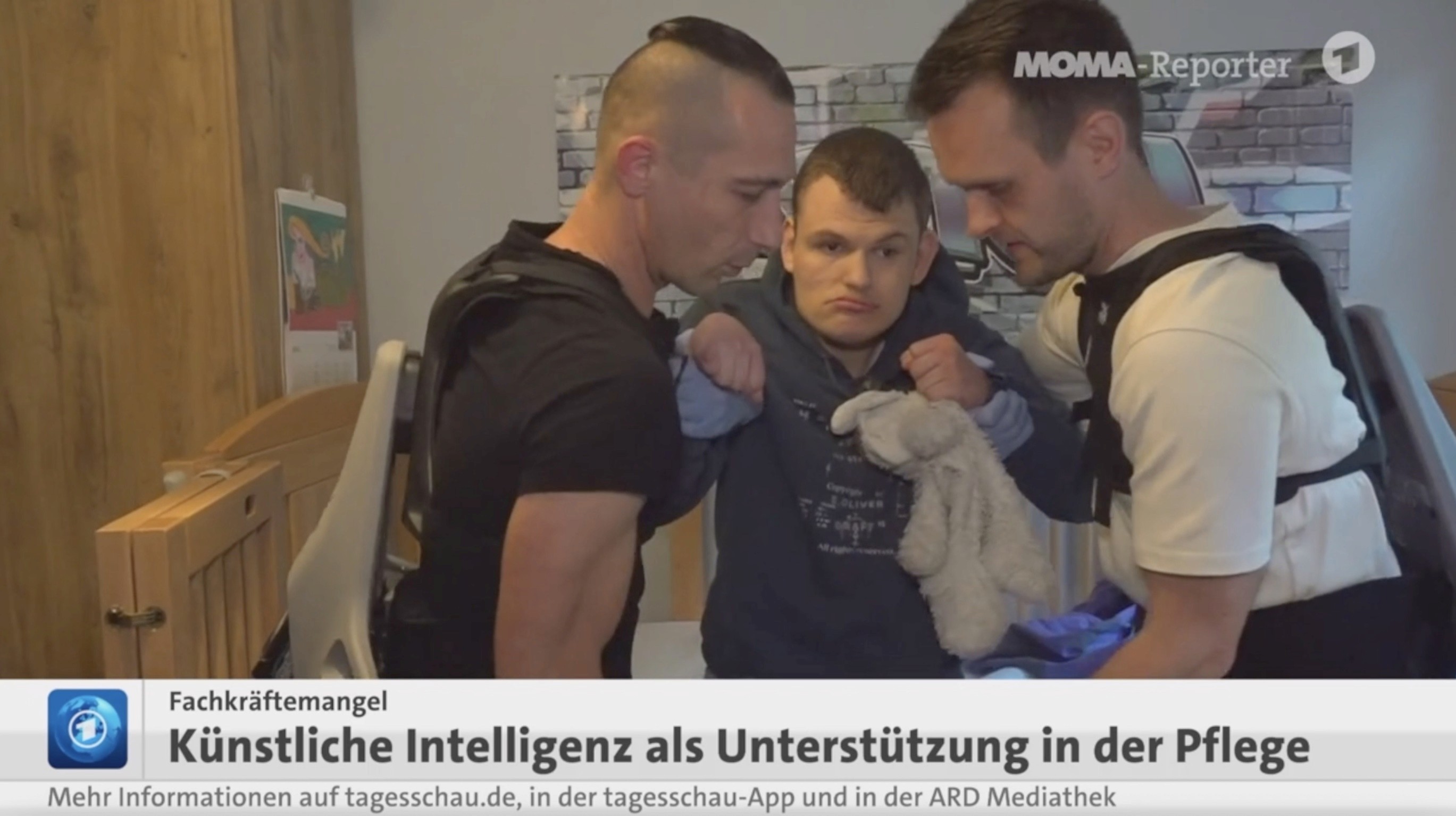
Among the technologies featured was German Bionic's EXIA, which can support care professionals during physically demanding tasks such as repositioning, transferring and mobilizing patients.
Against the backdrop of workforce shortages and demographic change, the potential of Human Augmentation becomes particularly relevant. Reducing physical strain can help protect healthcare professionals' health while making care jobs more attractive and sustainable in the long term.
Growing International Interest: German Bionic Featured on TF1’s Prime-Time News
The growing attention extends well beyond Germany, as demonstrated by a recent report on French television broadcaster TF1.

In its flagship 8 PM news programme, “LE20H”, TF1 explored real-world applications of robotic exoskeletons, including German Bionic's technology in use at French service provider ISOR.
Since June 2024, German Bionic's active exoskeletons have been supporting ISOR employees in physically demanding tasks involving the handling and movement of heavy loads.
The report also highlighted how Human Augmentation goes beyond traditional occupational health and safety. In industries facing recruitment challenges and workforce shortages, intelligent physical assistance can help make demanding jobs more attractive and accessible to a broader range of people, including younger generations.
The Future of Physical Work Is Human-Centric
Whether in airport ground handling, healthcare or industrial manufacturing, physical work remains essential. The key question is therefore not only which tasks can be automated in the future, but also how technology can better support the people performing them.
This is precisely the approach German Bionic is pursuing with EXIA. Combining artificial intelligence, active robotics and a fundamentally human-centric design, the technology opens up new opportunities to reduce physical strain and make workplaces safer, more inclusive and more attractive.
The growing media attention reflects a broader shift: Human Augmentation is moving beyond a specialized technology discussion and becoming part of a wider societal conversation about health, work and the role of intelligent robotics in everyday life.
Learn more: Discover EXIA and German Bionic's Human Augmentation technology
Whether in offices, healthcare, manufacturing or logistics, back pain is a widespread problem that affects not only people's quality of life but also the world of work.
Public and media interest in how to prevent back pain, reduce physical strain and effectively treat existing conditions is correspondingly high.
The ZDF documentary “Nie wieder Rücken!” (“Never Back Pain Again!”) explores a range of approaches, from physical exercise and physiotherapy to modern pain management and technological innovation.
One of these approaches comes from German Bionic: intelligent, active exoskeletons designed to support people in physically demanding tasks while keeping them fully in control of their movements.
Human Augmentation in Action: EXIA at Nuremberg Airport
For the documentary, German public broadcaster ZDF visits Albrecht Dürer Airport Nuremberg, where ground handling teams use German Bionic's AI-powered exoskeleton EXIA in everyday baggage handling operations.
The physical demands of ground handling are considerable. Thousands of pieces of luggage are moved every day. Individual suitcases can weigh up to 32 kilograms and must be lifted, transferred, carried or positioned in confined aircraft cargo holds, often under significant time pressure.
This is where EXIA comes in. The active exoskeleton provides targeted physical assistance when lifting, lowering and carrying heavy loads, as well as when working in ergonomically challenging postures. By doing so, it can help reduce muscular strain on the lower back and physical fatigue.
What makes EXIA different is its use of Physical AI. Drawing on years of movement data collected in real-world working environments, the system recognizes different movement patterns and physical demands. Its robotic assistance adapts in real time to the individual user and task, providing up to 38 kilograms of adaptive lifting support.
Airports are a particularly compelling example of the technology's potential. While many processes can be automated, tasks such as loading passenger baggage or handling irregularly shaped cargo remain physically demanding and require human flexibility and judgment.
Human Augmentation therefore takes a different approach from full automation: Rather than replacing people, it uses intelligent technology to enhance and support their physical capabilities.
EXIA is already deployed at airports worldwide, demonstrating how human-centric robotics can contribute to more ergonomic and sustainable working conditions.
Watch the full ZDF documentary “Nie wieder Rücken!”.
Why Exoskeletons Are Attracting Growing Media Attention
The ZDF documentary is part of a broader wave of media interest in exoskeletons and Human Augmentation. The conversation is no longer simply about the fascination of advanced robotics. Increasingly, it addresses a question of major societal relevance: How can we help people stay healthy and remain in the workforce throughout their careers, even in physically demanding jobs?
Another example comes from Germany's ARD public broadcaster. In its morning news programme, Morgenmagazin, the segment “MOMA-Reporter: Roboter-Arm und Exoskelett – Mit Hightech gegen den Pflege-Notstand” (“Robotic Arms and Exoskeletons – High-Tech Solutions for the Nursing Shortage”) explored the use of modern assistive technologies in healthcare.
Among the technologies featured was German Bionic's EXIA, which can support care professionals during physically demanding tasks such as repositioning, transferring and mobilizing patients.
Against the backdrop of workforce shortages and demographic change, the potential of Human Augmentation becomes particularly relevant. Reducing physical strain can help protect healthcare professionals' health while making care jobs more attractive and sustainable in the long term.
Growing International Interest: German Bionic Featured on TF1’s Prime-Time News
The growing attention extends well beyond Germany, as demonstrated by a recent report on French television broadcaster TF1.
In its flagship 8 PM news programme, “LE20H”, TF1 explored real-world applications of robotic exoskeletons, including German Bionic's technology in use at French service provider ISOR.
Since June 2024, German Bionic's active exoskeletons have been supporting ISOR employees in physically demanding tasks involving the handling and movement of heavy loads.
The report also highlighted how Human Augmentation goes beyond traditional occupational health and safety. In industries facing recruitment challenges and workforce shortages, intelligent physical assistance can help make demanding jobs more attractive and accessible to a broader range of people, including younger generations.
The Future of Physical Work Is Human-Centric
Whether in airport ground handling, healthcare or industrial manufacturing, physical work remains essential. The key question is therefore not only which tasks can be automated in the future, but also how technology can better support the people performing them.
This is precisely the approach German Bionic is pursuing with EXIA. Combining artificial intelligence, active robotics and a fundamentally human-centric design, the technology opens up new opportunities to reduce physical strain and make workplaces safer, more inclusive and more attractive.
The growing media attention reflects a broader shift: Human Augmentation is moving beyond a specialized technology discussion and becoming part of a wider societal conversation about health, work and the role of intelligent robotics in everyday life.
Learn more: Discover EXIA and German Bionic's Human Augmentation technology
 German Bionic Logo