Remembering the 2011 Japan Disaster: How AI-Powered Exoskeletons Can Support First Responders
Remembering the 2011 Japan Disaster: How AI-Powered Exoskeletons Can Support First Responders
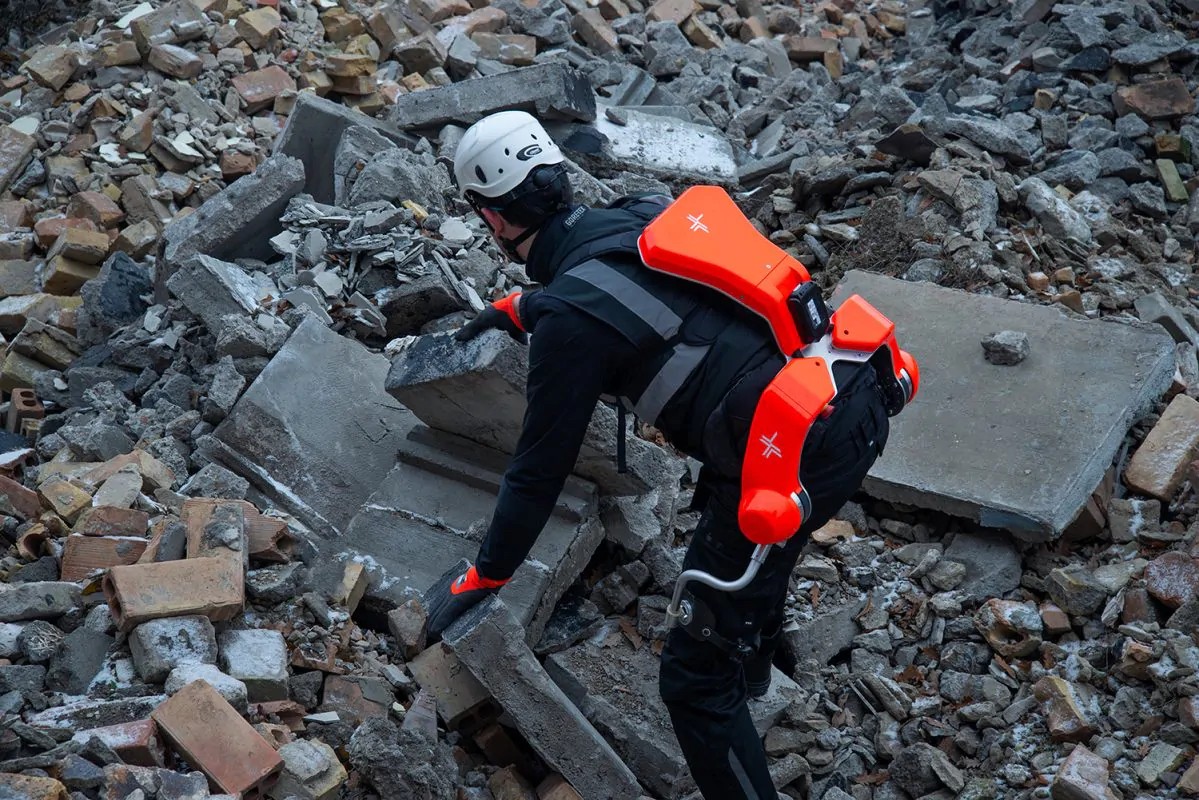
On March 11, 2011, a magnitude 9.0 earthquake and massive tsunami devastated large parts of Japan, placing enormous physical demands on first responders. AI-powered wearable robotics like German Bionic’s Exia can support disaster response teams by reducing physical strain, enhancing lifting capability, and enabling safer operations in challenging rescue environments.
On March 11, 2011, a magnitude 9.0 earthquake and massive tsunami devastated large parts of Japan, placing enormous physical demands on first responders. AI-powered wearable robotics like German Bionic’s Exia can support disaster response teams by reducing physical strain, enhancing lifting capability, and enabling safer operations in challenging rescue environments.
Copy link to share
Copy link to share
Link copied to clipboard !
Copy link to share
Link copied to clipboard !
On March 11, 2011, a magnitude 9.0–9.1 earthquake—the most powerful ever recorded in Japan—triggered a devastating tsunami, with waves reaching up to 40 meters (130+ feet) in some coastal areas. The disaster caused widespread destruction and placed enormous physical demands on first responders who worked under extreme conditions to rescue survivors, clear debris, and restore critical infrastructure.
In disaster zones, first responders often operate under intense physical pressure while clearing debris, moving equipment, or assisting injured people. German Bionic’s Exia, the company’s AI-powered exoskeleton, can support first helpers on the ground by acting as a flexible lifting device worn directly on the body.
Unlike heavy rescue machinery, which cannot always be deployed quickly or safely in unstable environments, wearable exoskeletons like Exia allow rescue teams to remain mobile while receiving powerful physical assistance. As a human-augmentation system, Exia combines human intelligence with machine power to enhance strength and endurance during demanding missions.
Exia can provide up to 38 kg (84 lbs) of adaptive lift support per movement, helping reduce physical strain when lifting debris, handling heavy equipment, or performing repetitive tasks during rescue operations. Powered by German Bionic’s AI-driven control system, the exoskeleton dynamically adapts to the wearer’s movements and the task at hand, enabling safer and more efficient work even in challenging conditions.
Built for rugged environments, Exia is water- and dust-resistant, allowing it to operate reliably in the harsh conditions often encountered during disaster response. As a connected wearable system, it can also transmit operational data. In disaster scenarios, the ability to trace and locate deployed personnel can be critical for coordination, safety, and effective crisis management.
By augmenting human capabilities while preserving full freedom of movement, smart exoskeletons like Exia can become a valuable tool for civil protection units, emergency services, and disaster response teams operating in complex and physically demanding environments.
On March 11, 2011, a magnitude 9.0–9.1 earthquake—the most powerful ever recorded in Japan—triggered a devastating tsunami, with waves reaching up to 40 meters (130+ feet) in some coastal areas. The disaster caused widespread destruction and placed enormous physical demands on first responders who worked under extreme conditions to rescue survivors, clear debris, and restore critical infrastructure.
In disaster zones, first responders often operate under intense physical pressure while clearing debris, moving equipment, or assisting injured people. German Bionic’s Exia, the company’s AI-powered exoskeleton, can support first helpers on the ground by acting as a flexible lifting device worn directly on the body.
Unlike heavy rescue machinery, which cannot always be deployed quickly or safely in unstable environments, wearable exoskeletons like Exia allow rescue teams to remain mobile while receiving powerful physical assistance. As a human-augmentation system, Exia combines human intelligence with machine power to enhance strength and endurance during demanding missions.
Exia can provide up to 38 kg (84 lbs) of adaptive lift support per movement, helping reduce physical strain when lifting debris, handling heavy equipment, or performing repetitive tasks during rescue operations. Powered by German Bionic’s AI-driven control system, the exoskeleton dynamically adapts to the wearer’s movements and the task at hand, enabling safer and more efficient work even in challenging conditions.
Built for rugged environments, Exia is water- and dust-resistant, allowing it to operate reliably in the harsh conditions often encountered during disaster response. As a connected wearable system, it can also transmit operational data. In disaster scenarios, the ability to trace and locate deployed personnel can be critical for coordination, safety, and effective crisis management.
By augmenting human capabilities while preserving full freedom of movement, smart exoskeletons like Exia can become a valuable tool for civil protection units, emergency services, and disaster response teams operating in complex and physically demanding environments.
 German Bionic Logo