EXIA Explained | Back Pain and Absenteeism: How Exoskeletons Reduce Musculoskeletal Disorders in the Workplace
EXIA Explained | Back Pain and Absenteeism: How Exoskeletons Reduce Musculoskeletal Disorders in the Workplace
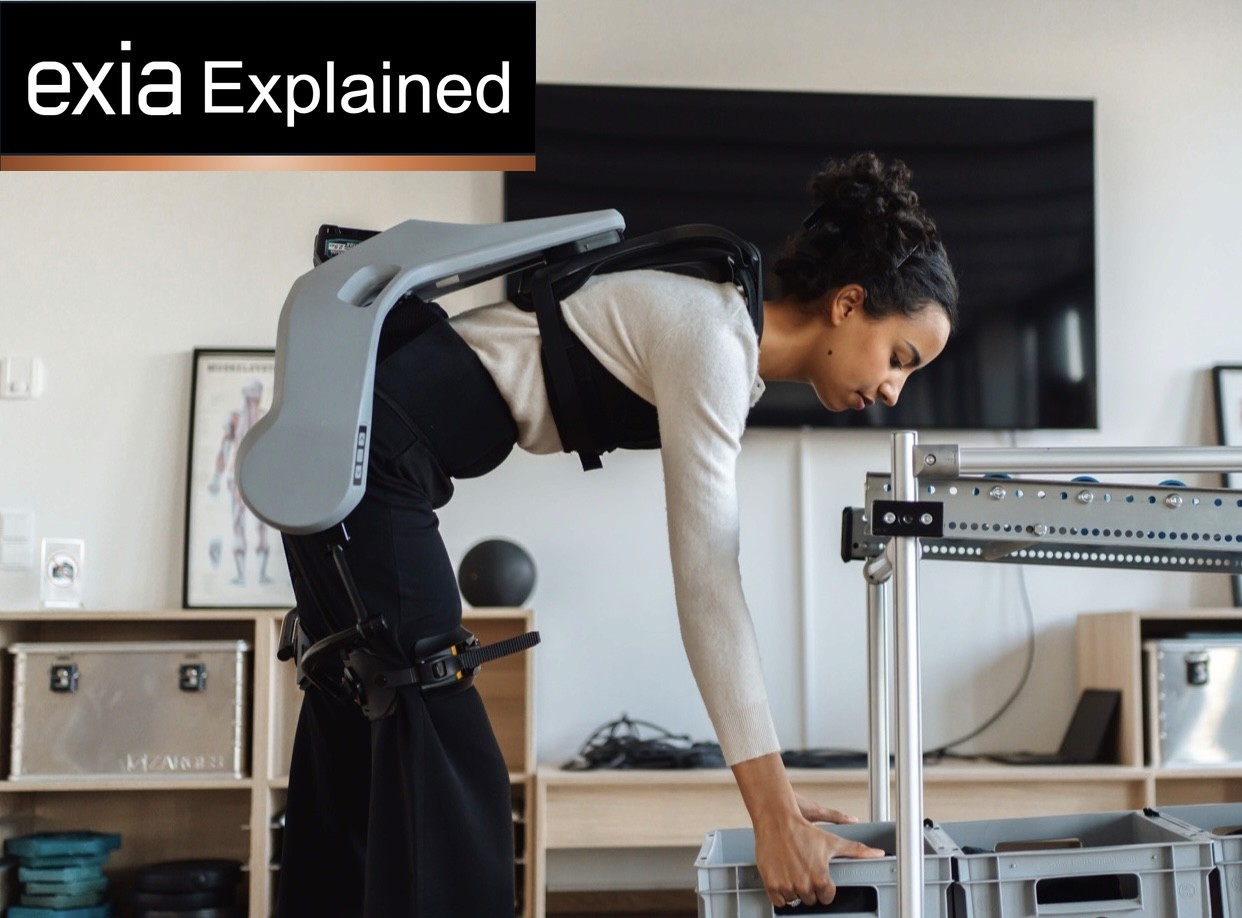
Musculoskeletal disorders (MSDs) are the largest work-related health challenge in modern workplaces. Here’s what you can do to fight them.
Musculoskeletal disorders (MSDs) are the largest work-related health challenge in modern workplaces. Here’s what you can do to fight them.
Copy link to share
Copy link to share
Link copied to clipboard !
Copy link to share
Link copied to clipboard !
Back pain, joint strain, and chronic muscle tension account for around 27% of all sick days—more than infections or mental health conditions. Workers in logistics, manufacturing, construction, healthcare, and skilled trades are particularly affected, where lifting, repetitive movements, and physically demanding tasks are part of everyday work.
As workforces age and labor shortages increase, protecting the physical health of employees is becoming a strategic priority for companies worldwide.
This is where EXIA, German Bionic’s AI-powered exoskeleton, comes in.
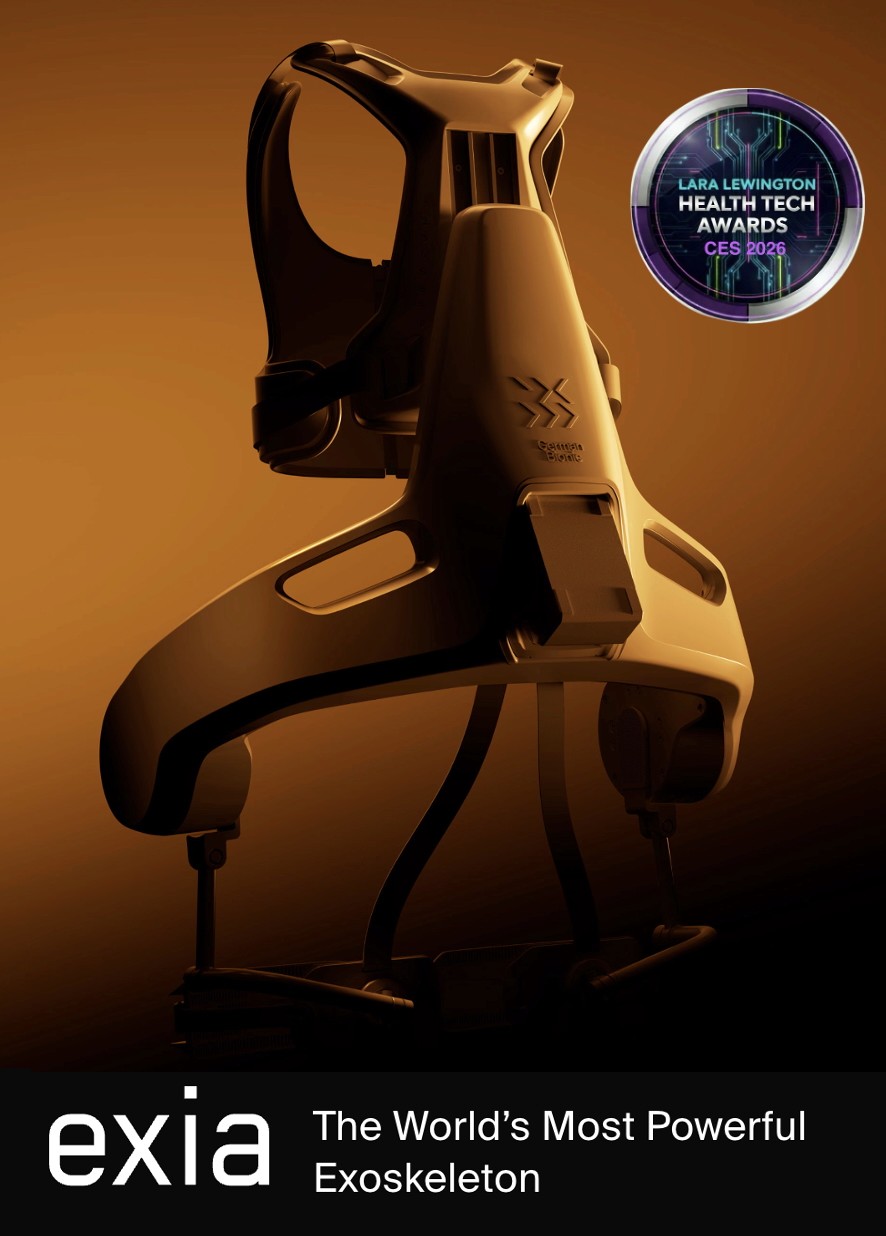
Designed for human augmentation in physically demanding environments, EXIA provides up to 38 kg (84 lbs) of adaptive lift support per movement, helping to significantly reduce strain on the lower back and the musculoskeletal system.
Unlike static lifting aids or passive support systems, EXIA uses AI to dynamically adapt assistance to the task and the individual user. This ensures that support is delivered precisely when it is needed—whether lifting, carrying, or performing repetitive movements.
The result:
• Reduced physical strain and fatigue
• Improved ergonomics during demanding tasks
• Greater workplace safety
• Sustainable workforce health—especially in aging societies
The importance of solutions addressing musculoskeletal strain is increasingly recognized internationally. Among other reasons—including its contribution to fighting musculoskeletal disorders—German Bionic received the CES Health Tech Award 2026.
Of course, preventing musculoskeletal disorders requires a holistic approach: ergonomic workplaces, training, movement, and organizational measures all play a role.
But where traditional solutions reach their limits, AI-driven wearable robotics like EXIA can provide an important additional layer of support.
👉 Stay tuned for more posts in our EXIA Explained series, where we highlight how human-centric AI is transforming physically demanding work.
Source: Badura, B., Ducki, A., Baumgardt, J., Meyer, M., Schröder, H. (Eds.) Fehlzeiten-Report 2024 – Bindung und Gesundheit: Fachkräfte gewinnen und halten. Springer, Berlin (2024).
Back pain, joint strain, and chronic muscle tension account for around 27% of all sick days—more than infections or mental health conditions. Workers in logistics, manufacturing, construction, healthcare, and skilled trades are particularly affected, where lifting, repetitive movements, and physically demanding tasks are part of everyday work.
As workforces age and labor shortages increase, protecting the physical health of employees is becoming a strategic priority for companies worldwide.
This is where EXIA, German Bionic’s AI-powered exoskeleton, comes in.
Designed for human augmentation in physically demanding environments, EXIA provides up to 38 kg (84 lbs) of adaptive lift support per movement, helping to significantly reduce strain on the lower back and the musculoskeletal system.
Unlike static lifting aids or passive support systems, EXIA uses AI to dynamically adapt assistance to the task and the individual user. This ensures that support is delivered precisely when it is needed—whether lifting, carrying, or performing repetitive movements.
The result:
• Reduced physical strain and fatigue
• Improved ergonomics during demanding tasks
• Greater workplace safety
• Sustainable workforce health—especially in aging societies
The importance of solutions addressing musculoskeletal strain is increasingly recognized internationally. Among other reasons—including its contribution to fighting musculoskeletal disorders—German Bionic received the CES Health Tech Award 2026.
Of course, preventing musculoskeletal disorders requires a holistic approach: ergonomic workplaces, training, movement, and organizational measures all play a role.
But where traditional solutions reach their limits, AI-driven wearable robotics like EXIA can provide an important additional layer of support.
👉 Stay tuned for more posts in our EXIA Explained series, where we highlight how human-centric AI is transforming physically demanding work.
Source: Badura, B., Ducki, A., Baumgardt, J., Meyer, M., Schröder, H. (Eds.) Fehlzeiten-Report 2024 – Bindung und Gesundheit: Fachkräfte gewinnen und halten. Springer, Berlin (2024).
 German Bionic Logo