Europe’s Care Systems Are Approaching a Workforce Cliff
Europe’s Care Systems Are Approaching a Workforce Cliff
Why human augmentation will be one of the structural answers for the decade ahead
Why human augmentation will be one of the structural answers for the decade ahead
Copy link to share
Copy link to share
Link copied to clipboard !
Copy link to share
Link copied to clipboard !
Europe’s care systems are approaching a workforce cliff – and it is time to face what will truly help.
In a recent and highly thoughtful analysis, Brian Daly, Founder of AgeTechX, describes what many hospitals and care facilities are already experiencing every day: Europe is entering the largest coordinated labour exit in its history. Over the next 5–10 years, a significant share of nurses, physicians, technicians and care workers will retire – faster than new staff can be trained.
Some of the numbers he highlights are stark:
By 2042, more than one third of Europe’s workforce will be over 50
By 2050, almost half of the population will be 55+
In many hospitals, 30–40% of nurses are already over 50
Long-term care is already overstretched, while the number of people in need of care continues to rise
This is not a distant scenario. It is unfolding now, in wards, care homes and home-care services across the continent.
From Demographic Pressure to Design Challenge
What makes Brian Daly’s perspective so important is that he does not frame ageing as a burden alone – but as a design challenge. Europe cannot “out-hire” this demographic shift. It can only adapt through thoughtful use of technology that expands human capacity rather than trying to replace it.
One of the levers he rightly points to is robotics and exoskeletons that extend working lives. Care work remains deeply physical: lifting patients, repositioning, transfers, long hours in strained postures. As the workforce ages, this physical load is one of the main drivers of injury, sick leave and early exit from the profession.
Human Augmentation in Care: From Relief to Resilience
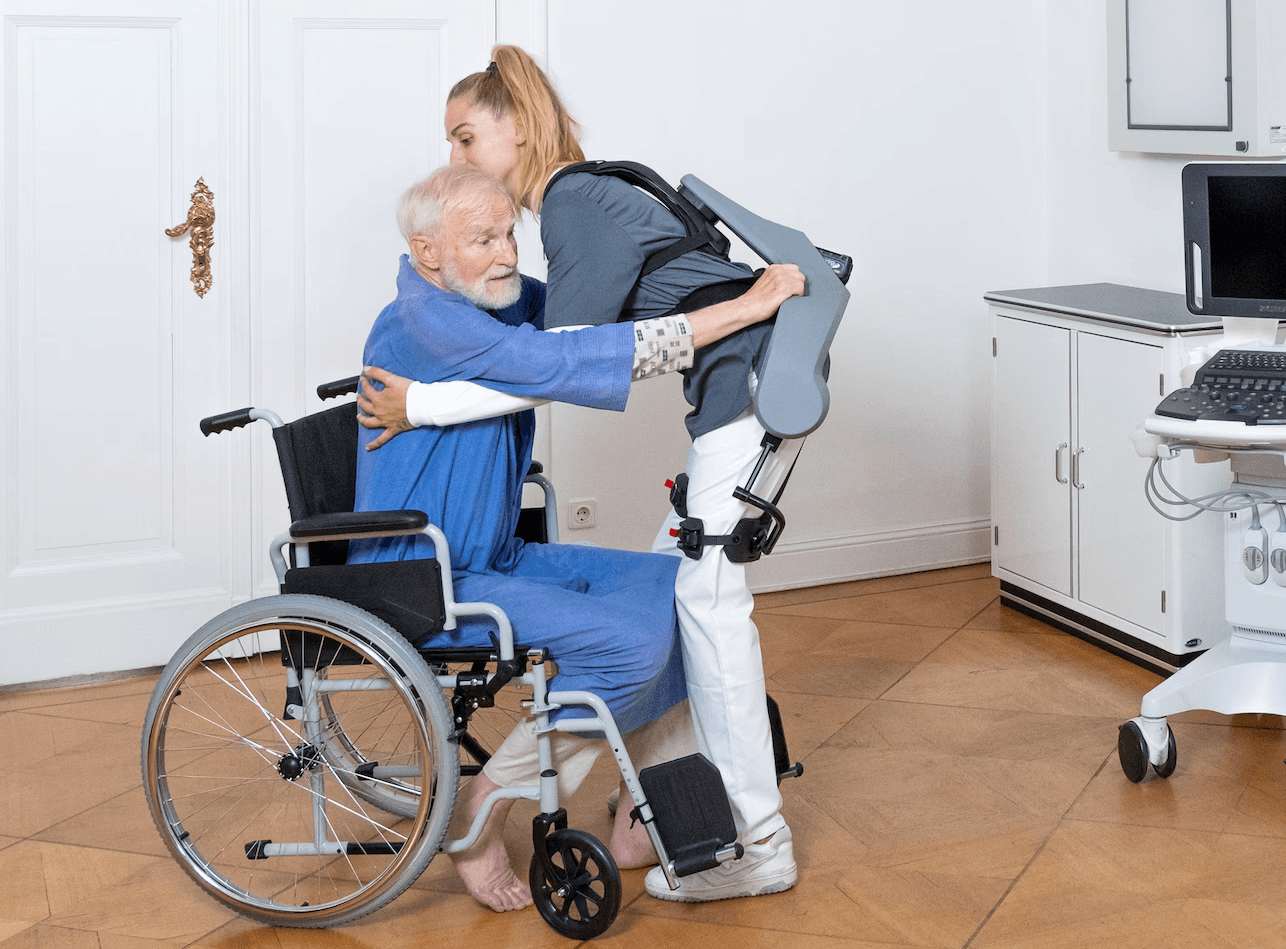
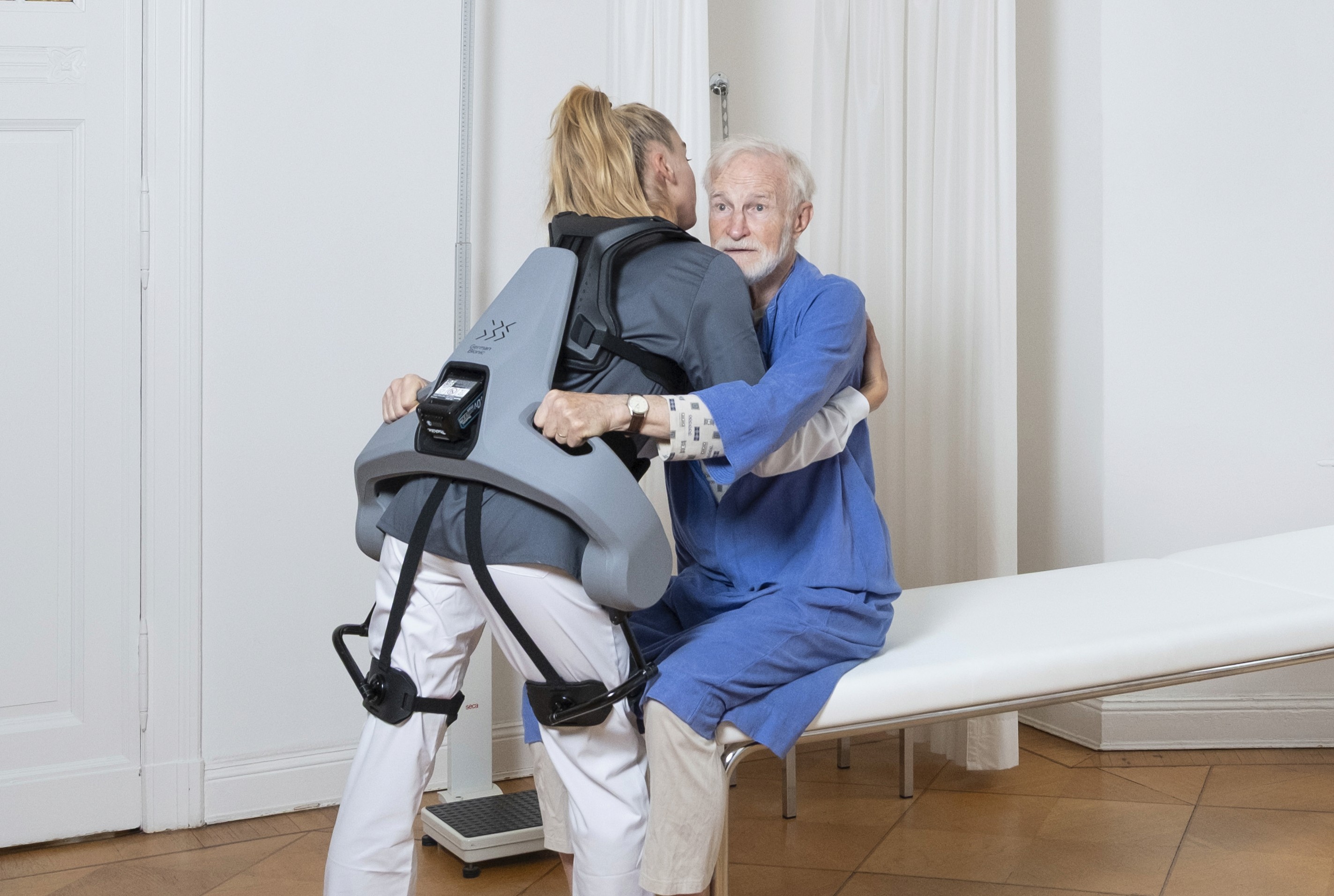
This is exactly where German Bionic sees its responsibility in the care and nursing space. With Exia, the newest Augmented-AI exoskeleton for care, German Bionic is not automating care – it is protecting the people who provide it. By actively supporting the lower back during lifting and transfer tasks, Exia reduces peak strain, helps prevent musculoskeletal disorders, and enables caregivers to work with greater safety, confidence and endurance.
In practical terms, this means:
Experienced caregivers can stay in the profession longer
Physical overload is reduced in one of the most demanding jobs in our society
Fewer injuries and sick days relieve already overstretched teams
The profession becomes more sustainable and more attractive for the next generation
Technology alone will not solve Europe’s workforce crisis. But technology that augments humans instead of replacing them fundamentally changes the equation: it extends healthy working lives, preserves experience, expands what can be done safely, and strengthens care systems at a structural level for the decades ahead.
Supporting Independence Before Care Begins
Beyond professional care, the German Bionic technology platform also forms the foundation for solutions that help ageing populations remain mobile, active, and independent for longer — before they ever enter formal care. By supporting physical capability earlier in life, human augmentation can delay dependency, reduce long-term care demand, and shift pressure away from already stretched care systems.
This view of ageing as a continuous journey — from independence to assisted care — is essential if Europe is to remain socially and economically resilient.
AgeTechX Berlin: From Home to Hospital
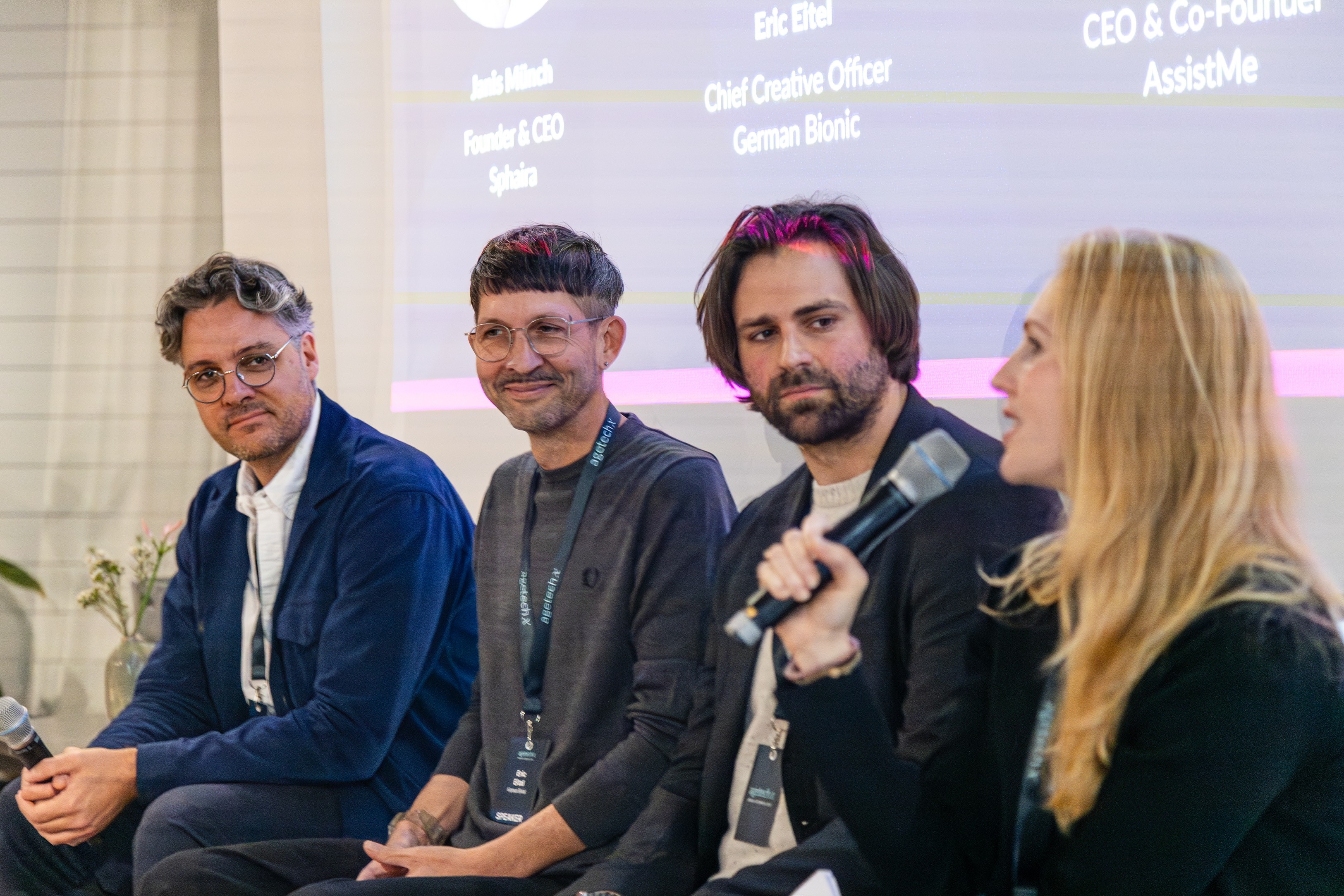
These questions were also at the heart of the AgeTechX Conference in Berlin this autumn, where German Bionic’s CCO Eric Eitel joined experts from healthcare, robotics, and digital innovation on the panel “Physical AI: From Home to Hospital”. Curated by Brian Daly and hosted by Dr. Florentine Kaniess (Charité), the discussion explored exactly how augmentation technologies can support societies across the full aging journey — from independent living to clinical care.
A Decade of Reinvention
Brian Daly writes that this will not be a decade of decline, but a decade of reinvention. In nursing and care, reinvention means finally giving caregivers the tools they deserve – not just to cope with the demographic shift, but to shape a healthier future for those who help others every day.
It is well worth reading Brian Daly’s full analysis here:
https://agetechx.com/blog/europes-workforce-cliff-are-hospitals-care-systems-and-essential-services-heading-toward-collapse
If you would like to learn how smart robotic exoskeletons like Exia can make a tangible difference in your care facility, our experts are happy to advise you:
https://www.germanbionic.com/contact
Europe’s care systems are approaching a workforce cliff – and it is time to face what will truly help.
In a recent and highly thoughtful analysis, Brian Daly, Founder of AgeTechX, describes what many hospitals and care facilities are already experiencing every day: Europe is entering the largest coordinated labour exit in its history. Over the next 5–10 years, a significant share of nurses, physicians, technicians and care workers will retire – faster than new staff can be trained.
Some of the numbers he highlights are stark:
By 2042, more than one third of Europe’s workforce will be over 50
By 2050, almost half of the population will be 55+
In many hospitals, 30–40% of nurses are already over 50
Long-term care is already overstretched, while the number of people in need of care continues to rise
This is not a distant scenario. It is unfolding now, in wards, care homes and home-care services across the continent.
From Demographic Pressure to Design Challenge
What makes Brian Daly’s perspective so important is that he does not frame ageing as a burden alone – but as a design challenge. Europe cannot “out-hire” this demographic shift. It can only adapt through thoughtful use of technology that expands human capacity rather than trying to replace it.
One of the levers he rightly points to is robotics and exoskeletons that extend working lives. Care work remains deeply physical: lifting patients, repositioning, transfers, long hours in strained postures. As the workforce ages, this physical load is one of the main drivers of injury, sick leave and early exit from the profession.
Human Augmentation in Care: From Relief to Resilience
This is exactly where German Bionic sees its responsibility in the care and nursing space. With Exia, the newest Augmented-AI exoskeleton for care, German Bionic is not automating care – it is protecting the people who provide it. By actively supporting the lower back during lifting and transfer tasks, Exia reduces peak strain, helps prevent musculoskeletal disorders, and enables caregivers to work with greater safety, confidence and endurance.
In practical terms, this means:
Experienced caregivers can stay in the profession longer
Physical overload is reduced in one of the most demanding jobs in our society
Fewer injuries and sick days relieve already overstretched teams
The profession becomes more sustainable and more attractive for the next generation
Technology alone will not solve Europe’s workforce crisis. But technology that augments humans instead of replacing them fundamentally changes the equation: it extends healthy working lives, preserves experience, expands what can be done safely, and strengthens care systems at a structural level for the decades ahead.
Supporting Independence Before Care Begins
Beyond professional care, the German Bionic technology platform also forms the foundation for solutions that help ageing populations remain mobile, active, and independent for longer — before they ever enter formal care. By supporting physical capability earlier in life, human augmentation can delay dependency, reduce long-term care demand, and shift pressure away from already stretched care systems.
This view of ageing as a continuous journey — from independence to assisted care — is essential if Europe is to remain socially and economically resilient.
AgeTechX Berlin: From Home to Hospital
These questions were also at the heart of the AgeTechX Conference in Berlin this autumn, where German Bionic’s CCO Eric Eitel joined experts from healthcare, robotics, and digital innovation on the panel “Physical AI: From Home to Hospital”. Curated by Brian Daly and hosted by Dr. Florentine Kaniess (Charité), the discussion explored exactly how augmentation technologies can support societies across the full aging journey — from independent living to clinical care.
A Decade of Reinvention
Brian Daly writes that this will not be a decade of decline, but a decade of reinvention. In nursing and care, reinvention means finally giving caregivers the tools they deserve – not just to cope with the demographic shift, but to shape a healthier future for those who help others every day.
It is well worth reading Brian Daly’s full analysis here:
https://agetechx.com/blog/europes-workforce-cliff-are-hospitals-care-systems-and-essential-services-heading-toward-collapse
If you would like to learn how smart robotic exoskeletons like Exia can make a tangible difference in your care facility, our experts are happy to advise you:
https://www.germanbionic.com/contact
 German Bionic Logo