Deutscher Pflegetag 2025: Actively addressing the skilled worker shortage in the care sector with the AI-powered Exia exoskeleton from German Bionic
Deutscher Pflegetag 2025: Actively addressing the skilled worker shortage in the care sector with the AI-powered Exia exoskeleton from German Bionic
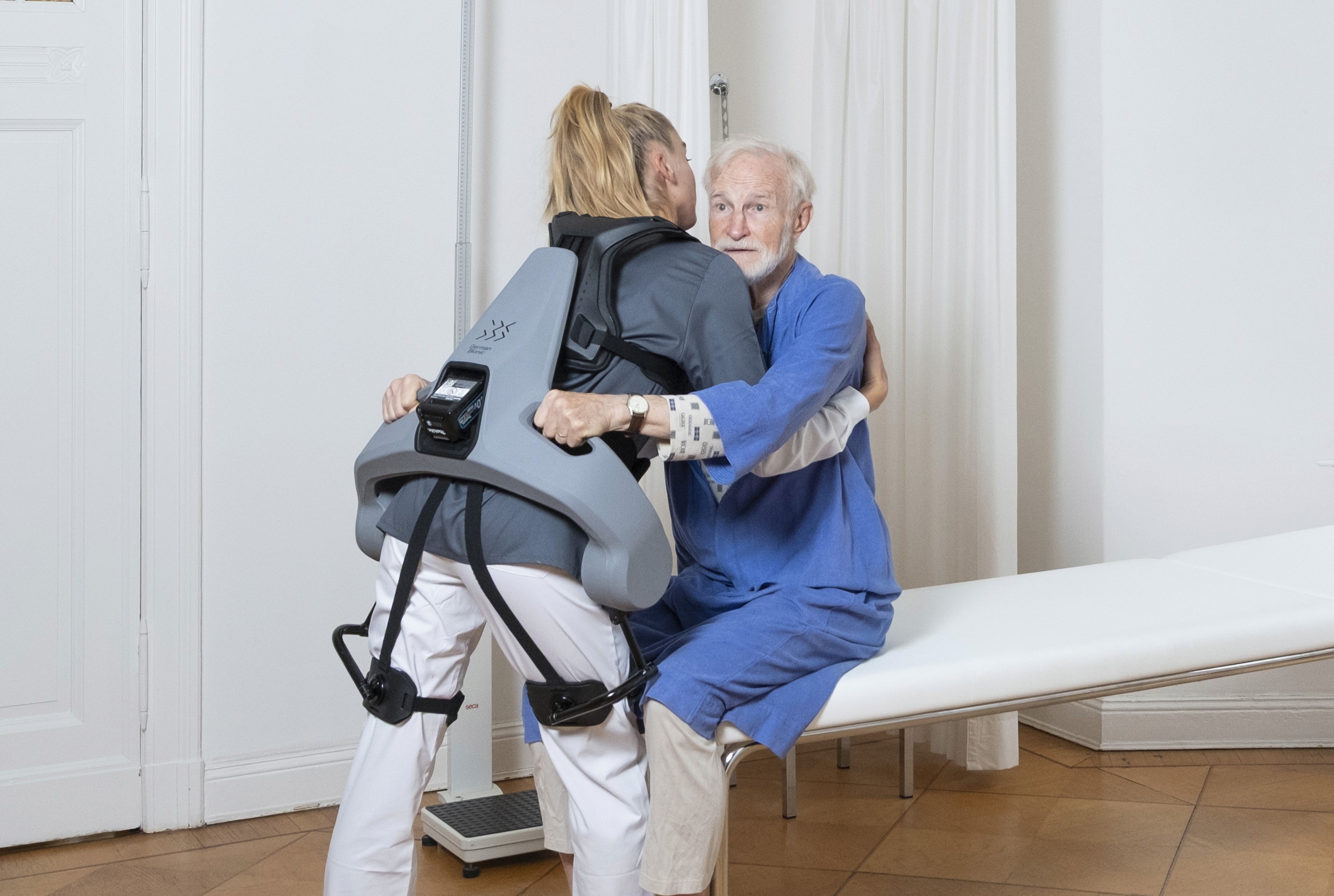
AI-powered, human-centered technology such as the Exia exoskeleton offers a tangible way to address the growing shortage of skilled workers in hospitals and care facilities. Designed to intelligently adapt to people and their everyday care routines, Exia provides meaningful support precisely where it is needed most.
AI-powered, human-centered technology such as the Exia exoskeleton offers a tangible way to address the growing shortage of skilled workers in hospitals and care facilities. Designed to intelligently adapt to people and their everyday care routines, Exia provides meaningful support precisely where it is needed most.
Copy link to share
Copy link to share
Link copied to clipboard !
Copy link to share
Link copied to clipboard !
Berlin, October 21, 2025. On November 5 and 6, Deutscher Pflegetag (German Nursing Day) will once again open its doors at hub27 in Berlin, bringing together experts and professionals to discuss the future of care. Among the innovations on display will be the Exia exoskeleton from German Bionic – a system purpose-built to support healthcare workers, developed in line with the latest findings in nursing science. At Stand 63, visitors will have the opportunity to experience Exia firsthand and discover how it intelligently adapts in real time to a wide range of movements and tasks involved in patient mobilization.
Supporting the nursing and other care workers with smart technology
The shortage of skilled workers in nursing and healthcare is already severe, especially in elder care. According to recent data from the Nursing Chamber of North Rhine-Westphalia in Germany, around 40 percent of nursing professionals will retire by 2030, with only a small number of young workers entering the field. The workload for remaining staff continues to rise, leading to a surge in musculoskeletal disorders (MSDs) such as chronic back pain.
The Exia exoskeleton from German Bionic can help address these challenges. Smart wearable systems like Exia are already being used successfully in increasing bnumbers of healthcare facilities – including the Charité – Universitätsmedizin Berlin, by Sana Clinics in Berlin, RoMed Clinics in Bavaria, and the Barmherzige Brüder Hospital in Salzburg.
Dynamic support for reliable, human-centered care
Exia is an AI-powered, fully connected exoskeleton that adapts flexibly to individual users and tasks in their daily routines. It detects movement patterns, interprets the context, and provides precisely the right level of support when lifting, walking, carrying, or working in bent-over positions.
Powered by AI trained on huge sets of anonymized data collected from real working environments, Exia delivers targeted assistance from the very first use. By supporting the lower back, it helps prevent strain and musculoskeletal disorders — making care jobs safer, more inclusive, and more appealing. This not only improves worker health and well-being but also helps counteract the staffing crisis by reducing injury and sick leave, extending careers, and improving retention in the profession.
Adaptive and flexible – technology that adapts to the individual
A key reason for Exia’s success is its adaptive design. Every caregiver and every care task is unique. Using AI and machine learning, Exia draws on billions of anonymized motion data points gathered from real-world work scenarios to understand individual movements and provide tailored support. It adjusts in real time to each person and activity, delivering intelligent, flexible, and adaptive assistance exactly where it’s needed.
Recognizing that many healthcare professionals are women, German Bionic is also introducing new vest designs specifically optimized for the female body to further improve comfort and ergonomics.
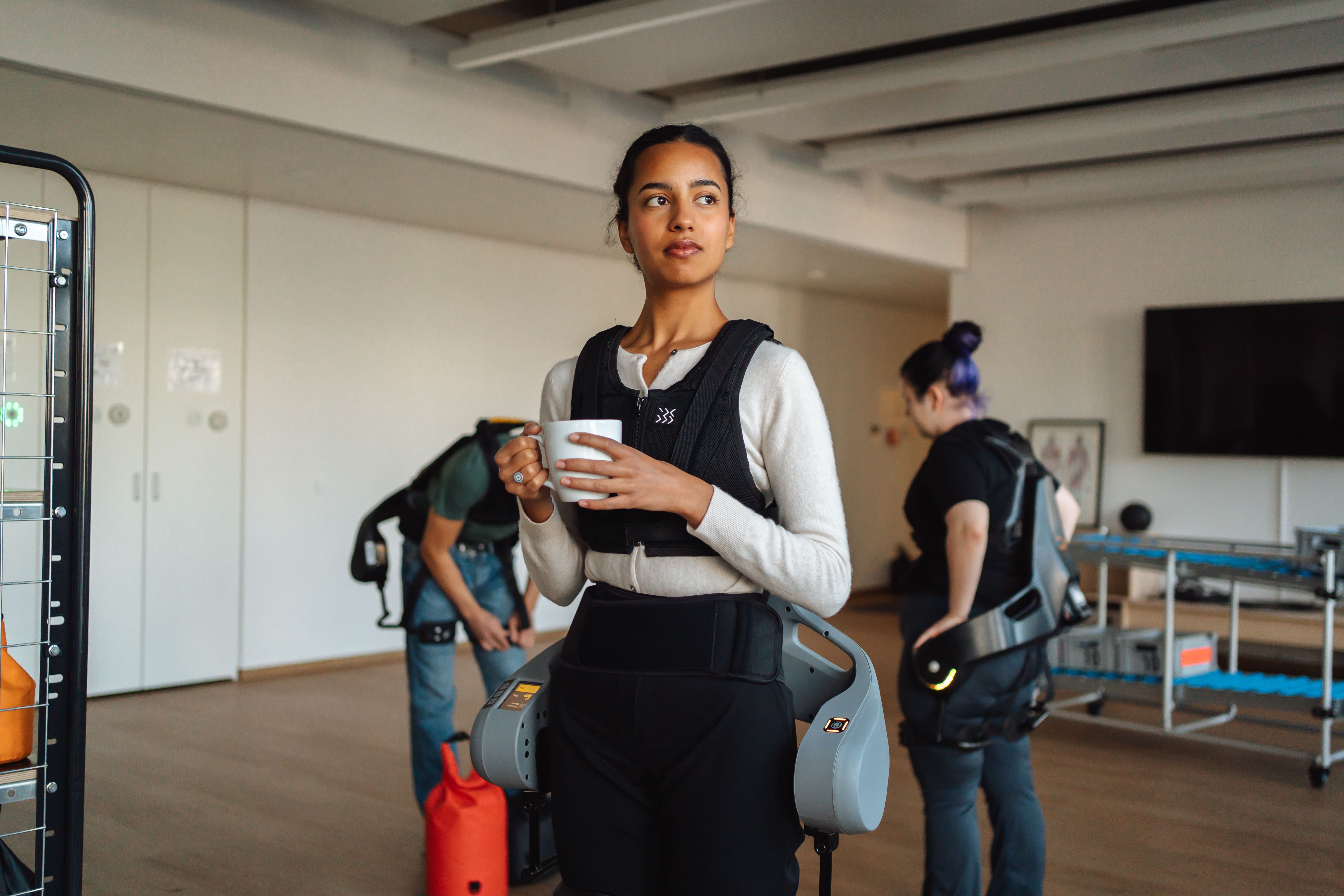
Inspiring a new generation of healthcare professionals
Smart wearable systems like Exia not only protect today’s care teams but also help attract and retain skilled professionals — and even encourage former caregivers to return to the field.
“Our exoskeleton is robotic, connected, smart, and even incorporates elements of gamification,” says Norma Steller, Chief Technology Officer at German Bionic. “The enthusiasm we see from people of all ages shows how technology like the Exia can make physically demanding professions more appealing — especially to a new, tech-savvy generation. Exia not only lightens the workload but also helps prevent the cycle of back pain and early career dropouts that have long plagued care professions.”
Developed from care research
Exia builds on insights gained from German Bionic’s previous healthcare model, the Apogee+, the world’s first exoskeleton specifically optimized for use in care environments. Developed as part of a research collaboration with Charité – Universitätsmedizin Berlin, the project tailored the system to various nursing tasks and healthcare requirements.
This included innovations such as patient support grips, designed directly with caregiver input to ensure real-world usability. A follow-up research project is now expanding this work into additional care areas.
Flexible support for many care scenarios
Flexibility is key in everyday healthcare. Exia is lightweight, easy to put on and take off, comfortable to wear, and protected against dirt and splashes (IP54). Its components are easy to disinfect, and its textile parts can be hot-washed, meeting the strict hygiene requirements of healthcare environments.
Typical use cases include:
Patient mobilization – lifting and moving patients between beds and wheelchairs
Assistance during medical examinations
Lifting during washing or dressing
Repositioning immobile patients
Helping patients transition into sitting or upright positions
Without assistance, these physically demanding tasks can lead to injury and potential cause early career exits. With Exia, caregivers can perform them more safely, efficiently, and sustainably.
Exia at a glance
Proven and tested in real-world healthcare environments
Reduces strain by up to 38 kg (84 lbs.) per lifting movement
Provides active support for walking, carrying, and bending tasks
Features integrated patient support grips
Helps prevent musculoskeletal injuries and disorders (MSDs)
Easy to disinfect
Protected against splashes and dust in accordance with IP54
Learns and improves continuously through AI and machine learning
Capability to receive regular over-the-air (OTA) updates
Fully connected – integrates into digital workflows and data platforms
Event details:
Deutscher Pflegetag (German Nursing Day) 2025
November 5–6, 2025
hub27 Messe Berlin
Booth 63

Berlin, October 21, 2025. On November 5 and 6, Deutscher Pflegetag (German Nursing Day) will once again open its doors at hub27 in Berlin, bringing together experts and professionals to discuss the future of care. Among the innovations on display will be the Exia exoskeleton from German Bionic – a system purpose-built to support healthcare workers, developed in line with the latest findings in nursing science. At Stand 63, visitors will have the opportunity to experience Exia firsthand and discover how it intelligently adapts in real time to a wide range of movements and tasks involved in patient mobilization.
Supporting the nursing and other care workers with smart technology
The shortage of skilled workers in nursing and healthcare is already severe, especially in elder care. According to recent data from the Nursing Chamber of North Rhine-Westphalia in Germany, around 40 percent of nursing professionals will retire by 2030, with only a small number of young workers entering the field. The workload for remaining staff continues to rise, leading to a surge in musculoskeletal disorders (MSDs) such as chronic back pain.
The Exia exoskeleton from German Bionic can help address these challenges. Smart wearable systems like Exia are already being used successfully in increasing bnumbers of healthcare facilities – including the Charité – Universitätsmedizin Berlin, by Sana Clinics in Berlin, RoMed Clinics in Bavaria, and the Barmherzige Brüder Hospital in Salzburg.
Dynamic support for reliable, human-centered care
Exia is an AI-powered, fully connected exoskeleton that adapts flexibly to individual users and tasks in their daily routines. It detects movement patterns, interprets the context, and provides precisely the right level of support when lifting, walking, carrying, or working in bent-over positions.
Powered by AI trained on huge sets of anonymized data collected from real working environments, Exia delivers targeted assistance from the very first use. By supporting the lower back, it helps prevent strain and musculoskeletal disorders — making care jobs safer, more inclusive, and more appealing. This not only improves worker health and well-being but also helps counteract the staffing crisis by reducing injury and sick leave, extending careers, and improving retention in the profession.
Adaptive and flexible – technology that adapts to the individual
A key reason for Exia’s success is its adaptive design. Every caregiver and every care task is unique. Using AI and machine learning, Exia draws on billions of anonymized motion data points gathered from real-world work scenarios to understand individual movements and provide tailored support. It adjusts in real time to each person and activity, delivering intelligent, flexible, and adaptive assistance exactly where it’s needed.
Recognizing that many healthcare professionals are women, German Bionic is also introducing new vest designs specifically optimized for the female body to further improve comfort and ergonomics.
Inspiring a new generation of healthcare professionals
Smart wearable systems like Exia not only protect today’s care teams but also help attract and retain skilled professionals — and even encourage former caregivers to return to the field.
“Our exoskeleton is robotic, connected, smart, and even incorporates elements of gamification,” says Norma Steller, Chief Technology Officer at German Bionic. “The enthusiasm we see from people of all ages shows how technology like the Exia can make physically demanding professions more appealing — especially to a new, tech-savvy generation. Exia not only lightens the workload but also helps prevent the cycle of back pain and early career dropouts that have long plagued care professions.”
Developed from care research
Exia builds on insights gained from German Bionic’s previous healthcare model, the Apogee+, the world’s first exoskeleton specifically optimized for use in care environments. Developed as part of a research collaboration with Charité – Universitätsmedizin Berlin, the project tailored the system to various nursing tasks and healthcare requirements.
This included innovations such as patient support grips, designed directly with caregiver input to ensure real-world usability. A follow-up research project is now expanding this work into additional care areas.
Flexible support for many care scenarios
Flexibility is key in everyday healthcare. Exia is lightweight, easy to put on and take off, comfortable to wear, and protected against dirt and splashes (IP54). Its components are easy to disinfect, and its textile parts can be hot-washed, meeting the strict hygiene requirements of healthcare environments.
Typical use cases include:
Patient mobilization – lifting and moving patients between beds and wheelchairs
Assistance during medical examinations
Lifting during washing or dressing
Repositioning immobile patients
Helping patients transition into sitting or upright positions
Without assistance, these physically demanding tasks can lead to injury and potential cause early career exits. With Exia, caregivers can perform them more safely, efficiently, and sustainably.
Exia at a glance
Proven and tested in real-world healthcare environments
Reduces strain by up to 38 kg (84 lbs.) per lifting movement
Provides active support for walking, carrying, and bending tasks
Features integrated patient support grips
Helps prevent musculoskeletal injuries and disorders (MSDs)
Easy to disinfect
Protected against splashes and dust in accordance with IP54
Learns and improves continuously through AI and machine learning
Capability to receive regular over-the-air (OTA) updates
Fully connected – integrates into digital workflows and data platforms
Event details:
Deutscher Pflegetag (German Nursing Day) 2025
November 5–6, 2025
hub27 Messe Berlin
Booth 63
 German Bionic Logo