FutureWork26: How Physical AI Turns Industrial Data into Real-World Innovation
FutureWork26: How Physical AI Turns Industrial Data into Real-World Innovation
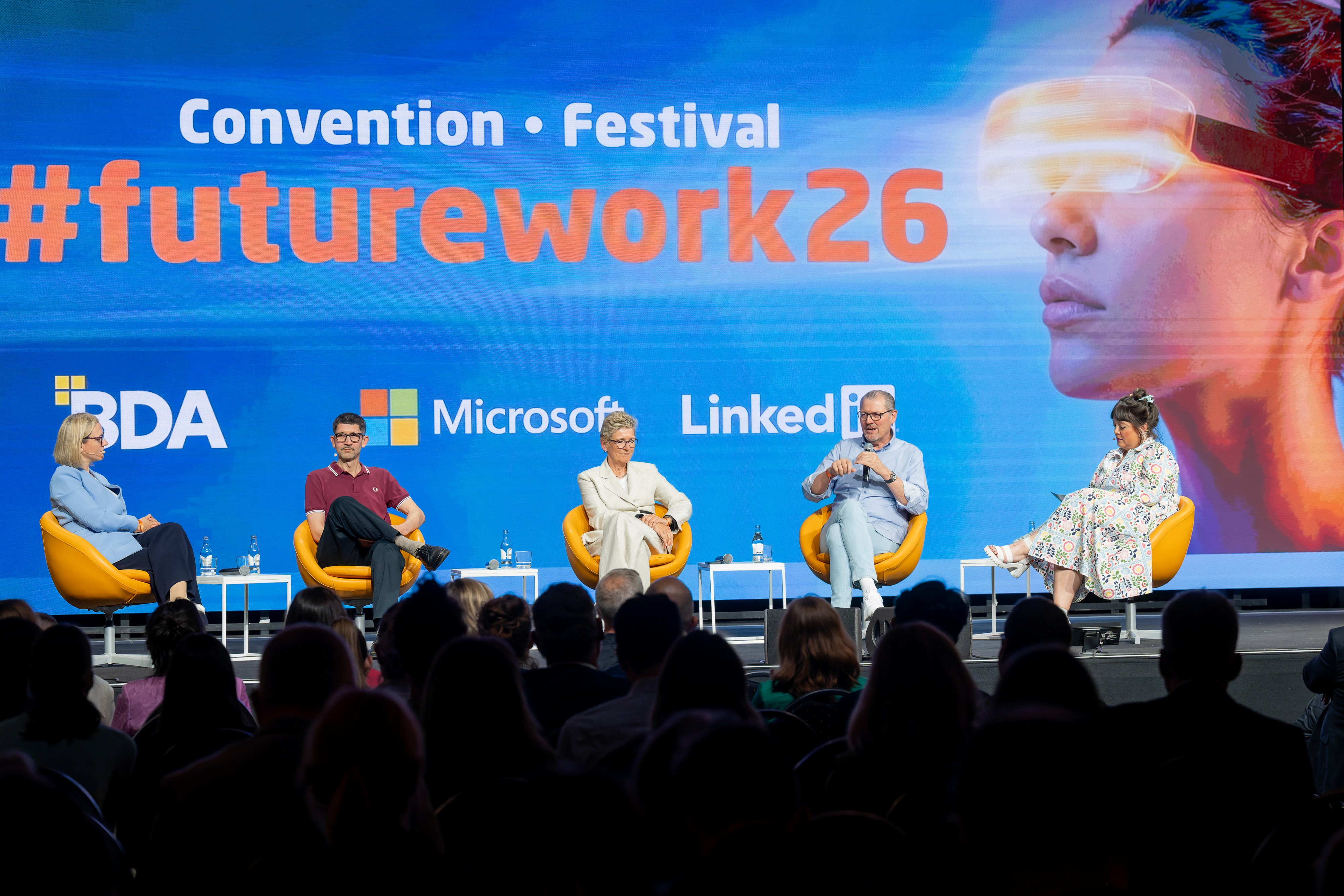
How can Germany and Europe remain competitive in the global AI race while addressing demographic change and growing labor shortages? This question was at the center of FutureWork26, the annual conference organized by the Confederation of German Employers' Associations (BDA), which brought together leading voices from business, science, and politics to discuss the future of work and artificial intelligence. Representing German Bionic, Chief Creative Officer Eric Eitel joined a panel discussion alongside Microsoft Germany CEO Agnes Heftberger and other senior leaders from German industry. The discussion focused on how AI can strengthen productivity, competitiveness, and economic resilience in Germany and across Europe in the years ahead.
How can Germany and Europe remain competitive in the global AI race while addressing demographic change and growing labor shortages? This question was at the center of FutureWork26, the annual conference organized by the Confederation of German Employers' Associations (BDA), which brought together leading voices from business, science, and politics to discuss the future of work and artificial intelligence. Representing German Bionic, Chief Creative Officer Eric Eitel joined a panel discussion alongside Microsoft Germany CEO Agnes Heftberger and other senior leaders from German industry. The discussion focused on how AI can strengthen productivity, competitiveness, and economic resilience in Germany and across Europe in the years ahead.
Copy link to share
Copy link to share
Link copied to clipboard !
Copy link to share
Link copied to clipboard !
A Competitive Advantage Hidden in Plain Sight
One of the key takeaways from the event was that Germany and Europe possess a unique competitive advantage in the age of AI: real-world industrial data, deep application expertise, and world-class engineering talent.
According to Eitel, these assets create the foundation not only for adopting AI, but for building proprietary AI models, platforms, and products capable of competing globally.
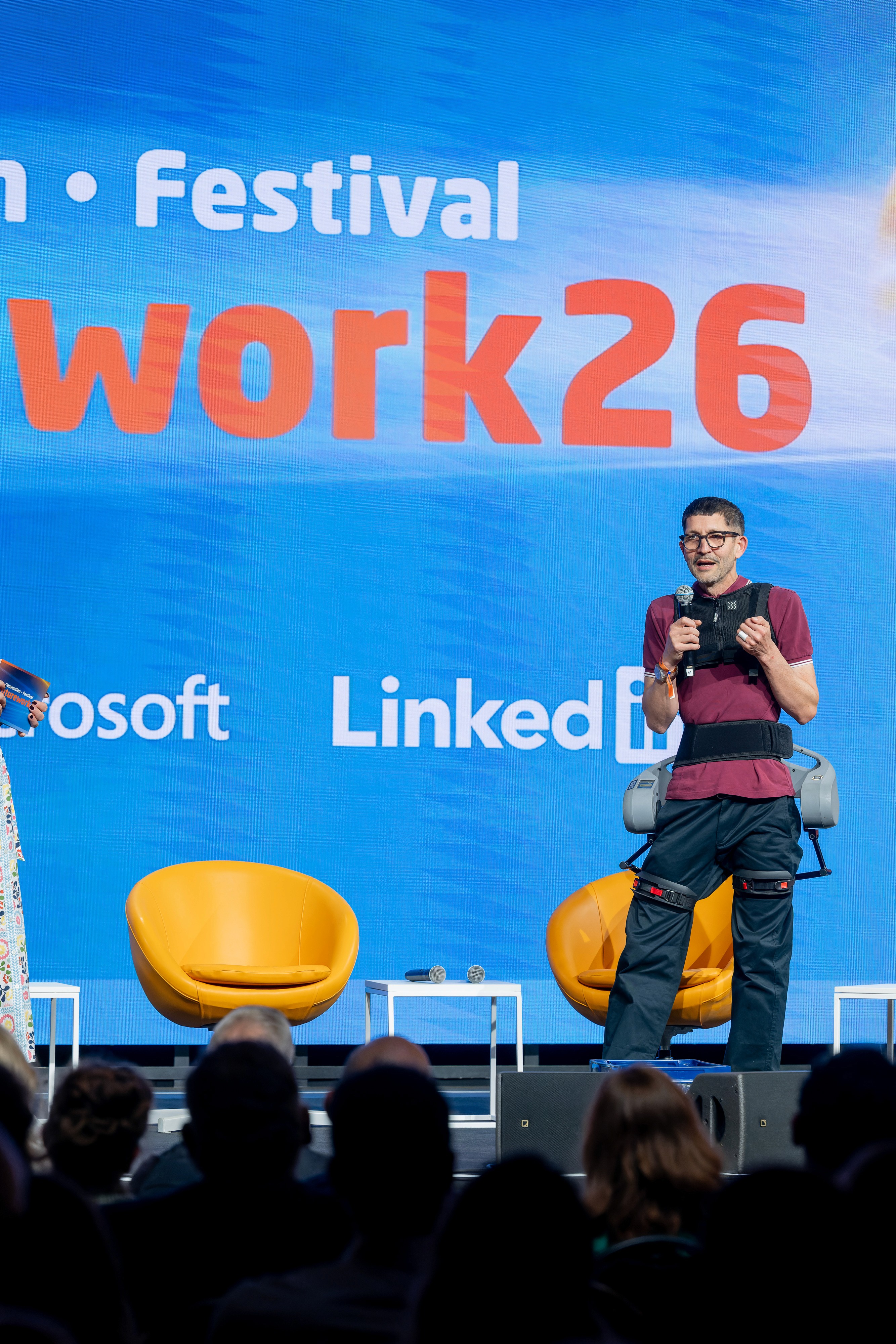
German Bionic itself provides a practical example of this approach. The company's Physical AI platform is built on real-world movement and industrial data collected from demanding occupational environments. These AI models continuously optimize and control EXIA, German Bionic's latest smart exoskeleton, enabling workers to perform physically demanding tasks more safely, efficiently, and sustainably.
Today, EXIA supports employees across logistics, intralogistics, manufacturing, healthcare, retail, aviation, and other industries where lifting, carrying, and repetitive physical work remain essential.
Physical AI and the Future of Work
The discussion was further reinforced by keynote speaker Prof. Ken Goldberg of the University of California, Berkeley, one of the world's leading robotics researchers.
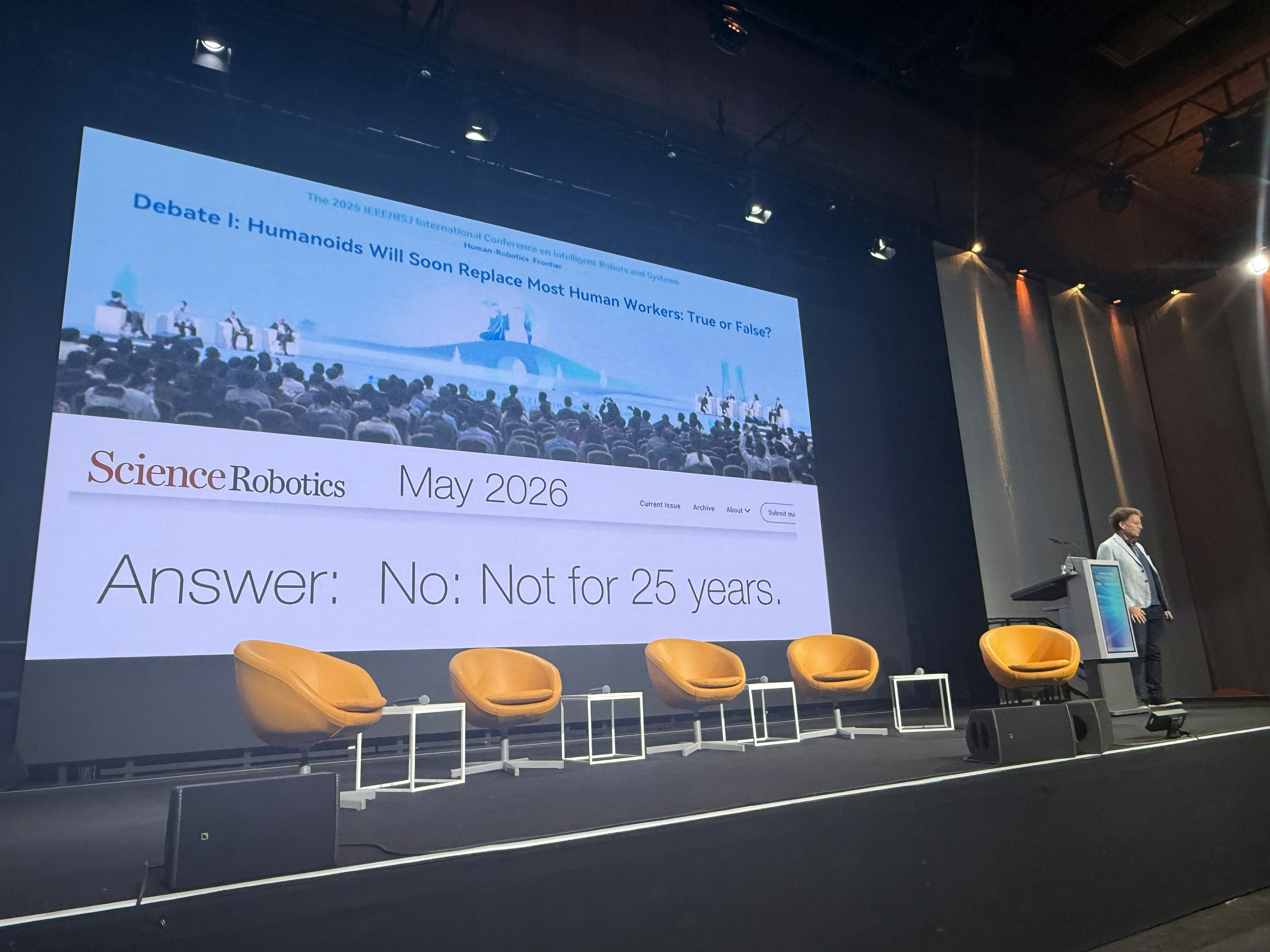
Goldberg highlighted augmentation as one of the most important functions of robotics in the coming decades. Referencing a recent robotics conference survey, he noted that a majority of robotics experts do not expect humanoid robots to broadly replace human labor within the next 25 years.
The implication is clear: rather than replacing people, many of the most impactful AI and robotics applications will focus on empowering them.
This perspective aligns closely with German Bionic's vision of Human Augmentation, where AI-powered wearable robotics help people remain productive, healthy, and active in physically demanding professions.
Building AI for the Real World
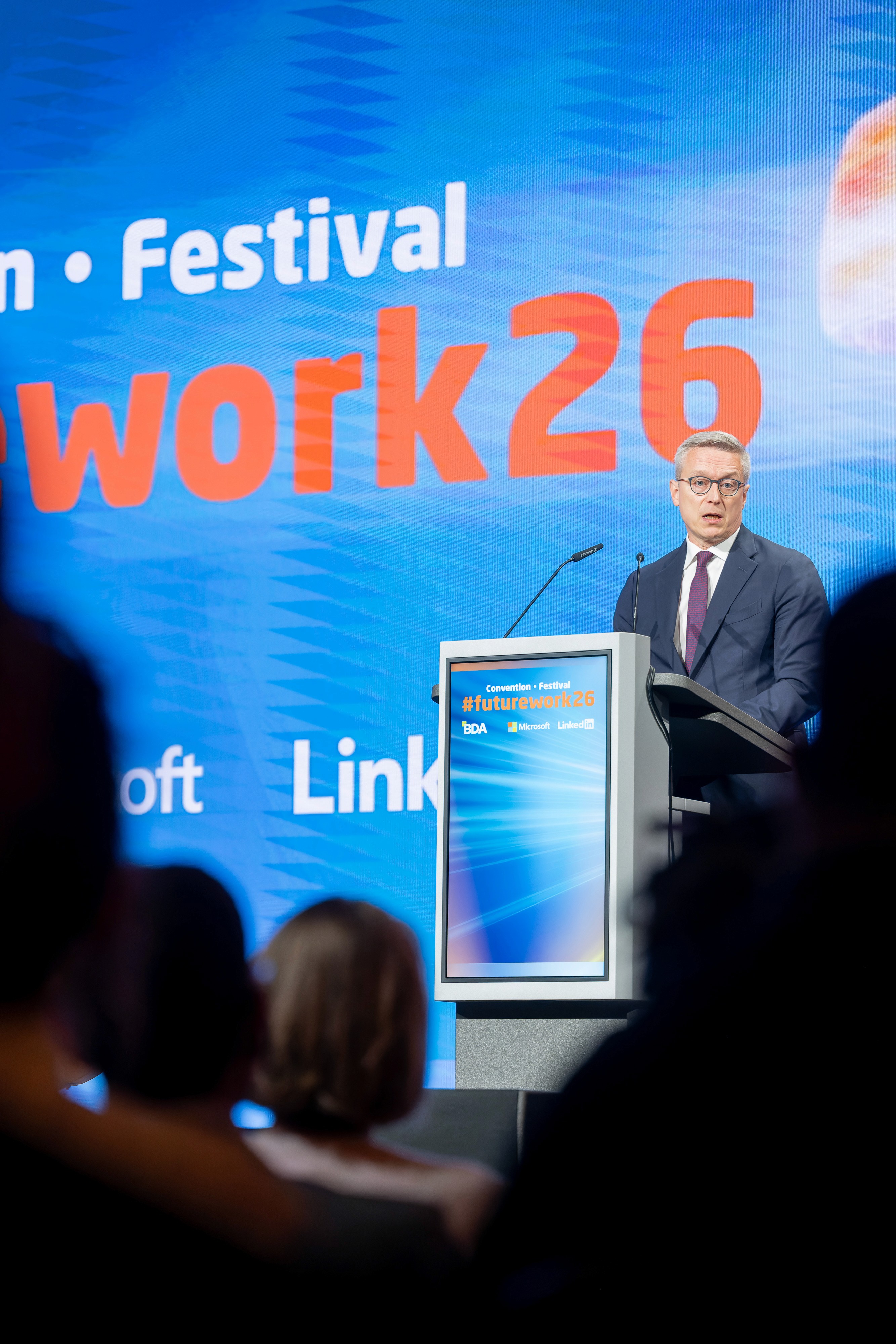
Federal Minister for Digital Affairs Karsten Wildberger also emphasized the importance of developing domestic AI capabilities and competing confidently through innovation made in Germany and Europe.
For German Bionic, the conclusion is straightforward: the future of AI will not be shaped solely inside data centers. It will also be shaped in factories, warehouses, hospitals, and care facilities.
As societies age and labor shortages continue to grow, Physical AI offers an opportunity to strengthen productivity while supporting the people performing essential physical work every day. The next wave of AI will not only process information. It will help people act in the real world.
A Competitive Advantage Hidden in Plain Sight
One of the key takeaways from the event was that Germany and Europe possess a unique competitive advantage in the age of AI: real-world industrial data, deep application expertise, and world-class engineering talent.
According to Eitel, these assets create the foundation not only for adopting AI, but for building proprietary AI models, platforms, and products capable of competing globally.
German Bionic itself provides a practical example of this approach. The company's Physical AI platform is built on real-world movement and industrial data collected from demanding occupational environments. These AI models continuously optimize and control EXIA, German Bionic's latest smart exoskeleton, enabling workers to perform physically demanding tasks more safely, efficiently, and sustainably.
Today, EXIA supports employees across logistics, intralogistics, manufacturing, healthcare, retail, aviation, and other industries where lifting, carrying, and repetitive physical work remain essential.
Physical AI and the Future of Work
The discussion was further reinforced by keynote speaker Prof. Ken Goldberg of the University of California, Berkeley, one of the world's leading robotics researchers.
Goldberg highlighted augmentation as one of the most important functions of robotics in the coming decades. Referencing a recent robotics conference survey, he noted that a majority of robotics experts do not expect humanoid robots to broadly replace human labor within the next 25 years.
The implication is clear: rather than replacing people, many of the most impactful AI and robotics applications will focus on empowering them.
This perspective aligns closely with German Bionic's vision of Human Augmentation, where AI-powered wearable robotics help people remain productive, healthy, and active in physically demanding professions.
Building AI for the Real World
Federal Minister for Digital Affairs Karsten Wildberger also emphasized the importance of developing domestic AI capabilities and competing confidently through innovation made in Germany and Europe.
For German Bionic, the conclusion is straightforward: the future of AI will not be shaped solely inside data centers. It will also be shaped in factories, warehouses, hospitals, and care facilities.
As societies age and labor shortages continue to grow, Physical AI offers an opportunity to strengthen productivity while supporting the people performing essential physical work every day. The next wave of AI will not only process information. It will help people act in the real world.
 ロゴ
ロゴ